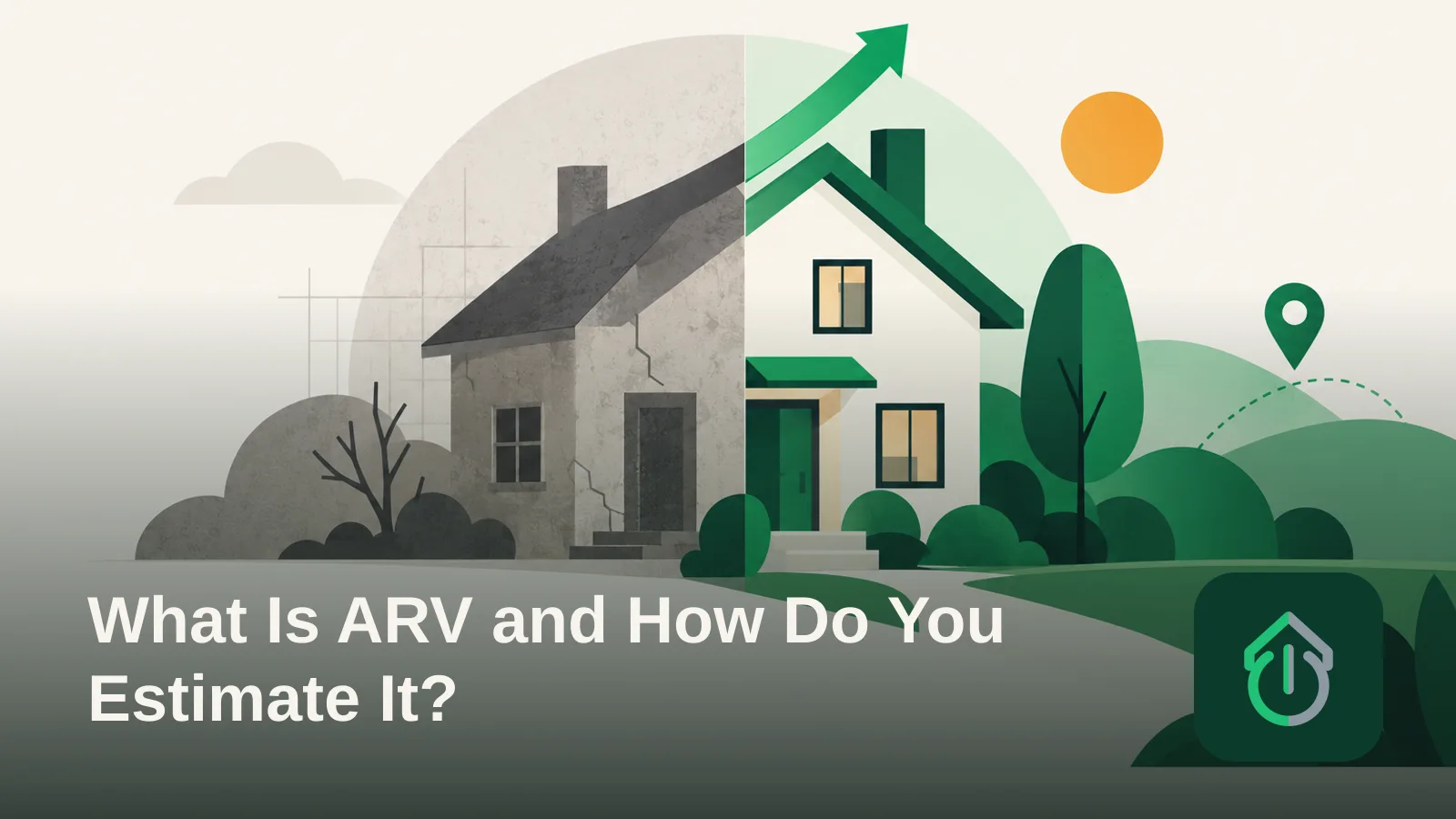
ARV stands for after-repair value: the estimated market value of a property after renovations are complete. Investors use it to figure out a maximum purchase price, size a rehab budget, and decide whether a deal makes financial sense before they ever pick up a hammer.
What ARV Is and Why It Matters
ARV is the price a property is expected to sell or appraise for once repairs are finished. It is different from the current list price or the price you'd pay today, which usually reflects the property's rough, as-is condition.
Investors rely on ARV because almost every decision in a flip or a BRRRR deal flows from it. Your maximum offer, your rehab budget, your financing, and your profit target are all calculated backward from what the finished property will realistically be worth, not from what it's worth right now.
How to Estimate ARV, Step by Step
Estimating ARV well is mostly about disciplined comp selection. Loose or optimistic comps are the single biggest reason new investors overpay.
Here's a practical process:
- •Pull recently sold comps, ideally within the last 3 to 6 months, within a half mile of the subject property.
- •Match on property type, bedroom and bathroom count, square footage, and lot size as closely as possible.
- •Prioritize comps that sold in renovated, move-in-ready condition, since that's the condition your finished property will be in.
- •Adjust each comp up or down for differences the market pays for, like an extra bathroom, a garage, or a finished basement.
- •Average the adjusted comps, then sanity-check the result against what's currently listed (not just sold) nearby, since active listings hint at where the market is heading.
The 70% Rule, the 90% Rule, and Other Max-Offer Formulas
Once you have an ARV estimate, the next question is what to actually offer. That's where max-offer formulas come in. The best-known is the 70% rule, often used as the basis for a flipper's max-offer rule, which caps the purchase price at a percentage of ARV minus the rehab estimate, leaving room for profit, holding costs, and the unexpected.
A less conservative variation, sometimes called the 90% rule, allows a higher percentage of ARV before subtracting repairs. It's more common in strong, fast-moving markets or on lighter cosmetic rehabs where risk is lower. Neither percentage is a law of physics; they're starting points that shift with your market, your experience, and how confident you are in the rehab number.
| Formula | Typical Basis | Best Used When |
|---|---|---|
| 70% rule | 70% of ARV, minus rehab costs | Heavier rehabs, less certainty, new investors wanting a cushion |
| 90% rule | 90% of ARV, minus rehab costs | Light cosmetic work, hot markets, experienced investors with tight cost control |
Common ARV Mistakes and Pitfalls
Overestimating ARV is the most expensive mistake in the business, because every other number in your deal gets built on top of it. A few patterns show up again and again.
Using comps that are too far away, too old, or in noticeably better or worse condition inflates the estimate. So does ignoring a flat or declining local market and assuming values will keep rising by the time renovations finish. On the other side, a sloppy rehab estimate can quietly eat the margin that looked fine on paper, which is why a realistic rehab estimate matters just as much as a careful comp pull.
Practical Takeaway
Treat ARV as a range, not a single precise number, and always lean toward the conservative end when you're deciding what to offer. Pair a disciplined comp analysis with a realistic rehab budget, apply a max-offer formula that fits your market and risk tolerance, and you'll avoid the single most common reason flips and BRRRR deals fail: paying for value that was never really there. For a full walkthrough of pulling and adjusting comps, see our step-by-step ARV analysis guide.
Frequently asked questions
What does ARV stand for in real estate?
ARV stands for after-repair value, which is the estimated market value of a property once planned renovations are complete. It's used to size offers and rehab budgets on flips and value-add rentals.
How is ARV different from current market value?
Current market value reflects the property's condition today, often as-is and in need of work. ARV reflects the hypothetical value after repairs are finished, which is usually higher.
Can I estimate ARV without hiring a contractor?
You can get a rough estimate using comparable sales and a general sense of renovation scope, but a contractor or experienced rehabber's input makes both the ARV and the rehab estimate far more reliable before you commit to a purchase.
Is the 70% rule always the right number to use?
No. It's a common starting point, but investors adjust the percentage based on rehab complexity, local market strength, and their own experience; some use a more aggressive 90% rule on light rehabs in fast-moving markets.
How this post was made: the figures above come from OnOffDeals’ own market-scan data (refreshed roughly monthly); the draft was written with AI assistance and checked against that data before publishing. Everything here is an estimate to help screen deals, not financial advice.
Underwrite your next deal in about a minute
ARV from real closed sales, a rehab budget that reads the listing, HUD rent, cash flow and flip profit after every cost, with every comp shown, used or rejected. Start free. Your first week is on us.
Try OnOffDeals free