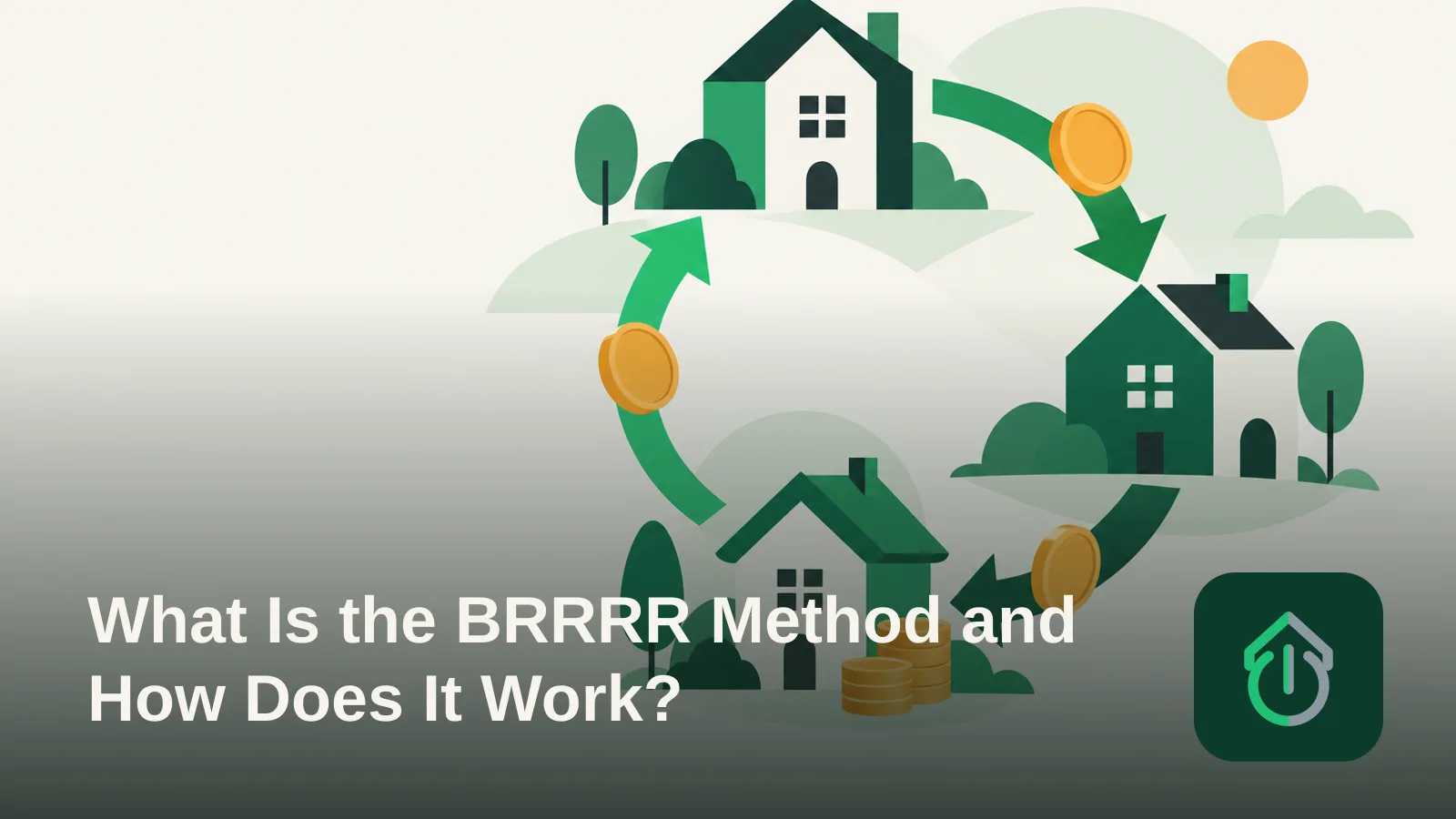
The BRRRR method is a buy-and-hold strategy where an investor buys a distressed property, fixes it up, rents it to a tenant, refinances based on the improved value, and uses the cash pulled out to repeat the process on another property. It's a way to build a rental portfolio without starting over financially each time.
What Is the BRRRR Method?
BRRRR stands for Buy, Rehab, Rent, Refinance, Repeat. It's a framework for acquiring rental properties in a way that lets an investor recover most or all of the capital used on one deal so it can be redeployed on the next. Instead of saving up a full down payment for every property, the investor leans on forced appreciation from renovation work and a cash-out refinance to fund the following purchase.
The appeal is straightforward: a buy-and-hold investor who masters the BRRRR method isn't capped at one or two properties by how much cash they have sitting around. Done well, it turns a single pool of money into a recurring source of down payments. Done poorly, it can leave an investor over-leveraged or stuck holding a property that won't refinance the way they expected.
How BRRRR Works: The Five Steps
Each letter in BRRRR represents a stage, and the steps build on each other. Skipping or rushing any one of them is usually where the strategy breaks down.
- •Buy: Find a property priced below its potential value after repairs, usually because it needs work or the seller wants a fast, simple sale. The purchase price has to leave enough room for renovation costs and a refinance that actually pulls cash back out.
- •Rehab: Complete the renovations needed to make the property safe, rentable, and worth more than you paid. A realistic rehab estimate before closing is what keeps this step from eating into your margin.
- •Rent: Place a qualified tenant and get the property generating steady cash flow. Lenders generally want to see an active lease before they'll refinance based on rental income.
- •Refinance: Get the property appraised at its new, higher value (the ARV, or after-repair value) and refinance into a new loan, ideally pulling out cash close to what you put in for the purchase and rehab.
- •Repeat: Use the cash from the refinance as the down payment on the next property and start the cycle again.
Running the Numbers: Rules of Thumb at Each Step
None of these rules replace a full underwriting of a specific property, but they're useful quick filters at each stage of a BRRRR deal. Investors often combine two or three of them before doing a deeper analysis.
On the buy side, a rehab-focused version of the max-offer rule caps what you'll pay based on a percentage of ARV minus repair costs, so you don't overpay before the work even starts. On the refinance side, lenders evaluating a cash-out refinance on a rental will often look at DSCR (debt service coverage ratio) rather than your personal income, and investors use metrics like cash-on-cash return to judge whether the deal still makes sense once it's a long-term rental.
| Rule of thumb | What it checks | Where it fits in BRRRR |
|---|---|---|
| 1% rule | Monthly rent at least 1% of all-in price | Quick screen during the Buy and Rent stages |
| 1.25% rule | Stricter cash-flow screen than the 1% rule | Tighter markets or higher-expense properties |
| 2% rule | Aggressive cash-flow screen | Lower-priced markets with strong rent-to-price ratios |
| 50% rule | Operating expenses estimated near half of rent | Sanity-checking cash flow before and after rehab |
| 70% rule / max-offer rule | Caps offer price relative to ARV minus repairs | Setting a ceiling during the Buy stage |
| 90% max-offer rule | Looser ARV-based ceiling, lower rehab/holding assumption | Lighter rehabs with shorter timelines |
Trade-offs and Common Pitfalls
BRRRR works best when every step goes close to plan, which means it also has more places to go wrong than a simple buy-and-hold purchase. The biggest risk is usually the refinance appraisal coming in lower than expected, which leaves less cash to pull out than the investor budgeted for the next deal. Rehab overruns are another common problem: underestimating repair costs eats directly into the equity the refinance is supposed to unlock.
Financing terms matter too. Many BRRRR investors use short-term or hard-money financing to buy and rehab, then refinance into a longer-term loan. Some lenders require a seasoning period, meaning the property has to be owned for a set number of months before they'll refinance based on the new value rather than the purchase price. Interest rate changes between purchase and refinance can also shrink or erase the cash-flow margin the deal was built on.
Because of these risks, it's worth running the numbers with a buffer rather than a best-case scenario, and treating the refinance step as the part of the plan most likely to need adjusting.
Practical Takeaway
BRRRR is a sequencing strategy, not a shortcut around the fundamentals of buying rentals: you still need a property priced right, a realistic rehab budget, a tenant who will pay on time, and a lender who will refinance on terms that work. If you're new to the sequence, it helps to first get comfortable with the basics of buying your first rental property before layering on the rehab and refinance steps.
Some investors also pair BRRRR with Section 8 tenants to add stability to the rental step, since a government housing program can mean a more predictable payment source once the property is leased. The fundamentals of the refinance and rehab stages don't change, but it's worth understanding how that pairing affects underwriting before committing to it.
Frequently asked questions
Does the BRRRR method work in every market?
BRRRR depends on finding properties priced below their post-repair value and being able to refinance near that higher value, which is easier in some markets than others. It's general information, not a guarantee, so it's worth researching local price-to-rent ratios and lender appraisal practices before relying on it.
How long does one BRRRR cycle take?
Timelines vary widely based on how extensive the rehab is, how fast you can lease the property, and whether your lender requires a seasoning period before refinancing. Some investors complete a cycle in several months, while others take a year or more, especially with larger renovations.
Can you use the BRRRR method with Section 8 tenants?
Yes, some investors specifically target Section 8 tenants during the Rent stage for payment stability, though program rules, inspection requirements, and timelines vary by local housing authority. This affects the Rent step of BRRRR but not the core Buy, Rehab, Refinance, or Repeat mechanics.
What's the difference between BRRRR and house flipping?
Flipping is a buy-rehab-sell strategy aimed at a one-time profit, often evaluated with the 70% rule as a maximum offer guideline. BRRRR keeps the property as a long-term rental and uses a refinance, not a sale, to recover capital for the next deal.
How this post was made: the figures above come from OnOffDeals’ own market-scan data (refreshed roughly monthly); the draft was written with AI assistance and checked against that data before publishing. Everything here is an estimate to help screen deals, not financial advice.
Underwrite your next deal in about a minute
ARV from real closed sales, a rehab budget that reads the listing, HUD rent, cash flow and flip profit after every cost, with every comp shown, used or rejected. Start free. Your first week is on us.
Try OnOffDeals free